Rural America Needs Surgeons. I Showed Up. Here’s What I Found
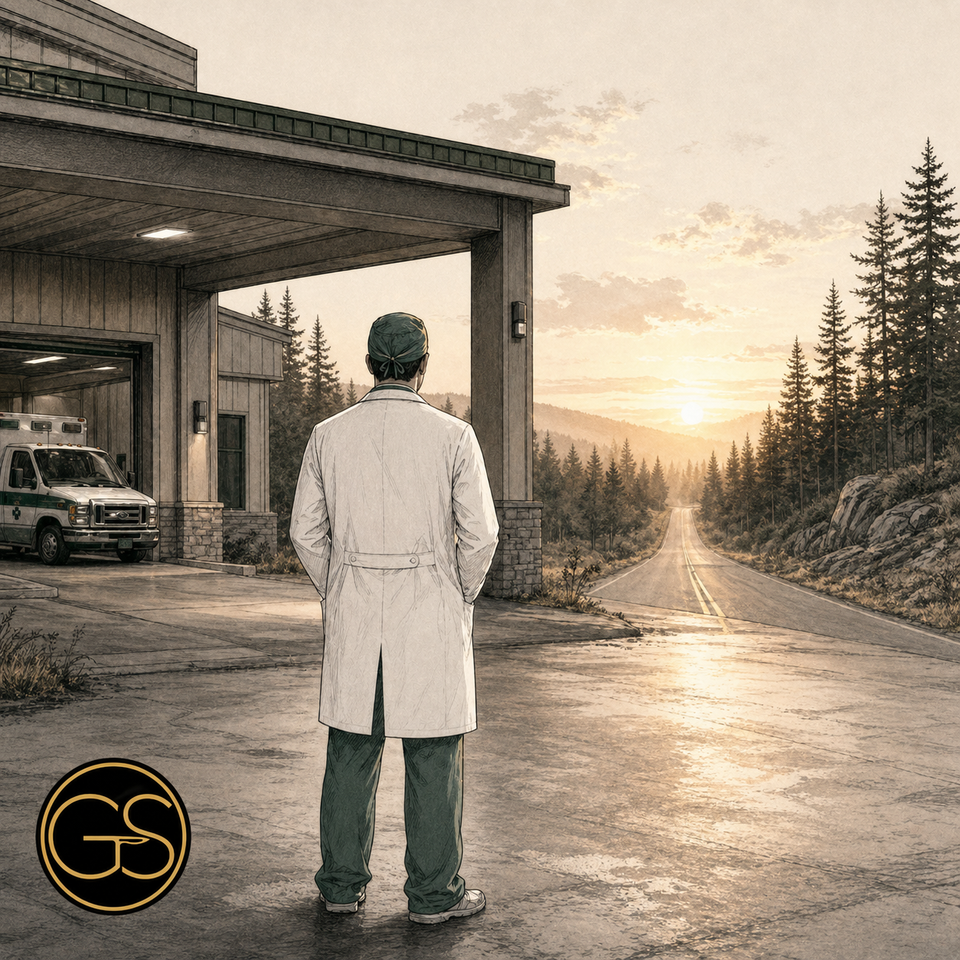
The itinerary read like a geography lesson I hadn’t studied for.
A flight from California to a hub city I knew. Then a connection to a regional airport I’d heard of but never used. Then a smaller plane to somewhere smaller than that. Then a rental car and a drive into woods that just kept going — the kind of woods that make you realize how much of this country you’ve never actually seen.
I was headed to a critical access hospital in a part of the country that most physicians spend their entire careers successfully avoiding.
I had accepted an assignment there on purpose.
"The itinerary read like a geography lesson I hadn’t studied for."
While roughly 20% of Americans live in rural areas, only about 9% of the nation’s physicians practice in those regions. That gap is even more pronounced for surgeons. In rural communities, there are currently only 4.67 surgeons per 100,000 people.
Read that number again. 4.67 surgeons per 100,000 people.
Nearly 60 million Americans live in rural communities that are increasingly burdened by a persistent and growing shortage of both general physicians and specialized surgeons.
These are not abstract statistics. They are specific towns. Specific patients. Specific appendices that rupture at 2am in a place where the nearest trauma center is a very long ambulance ride away.
I grew up in California. Big cities. Big hospitals. Big systems with every subspecialist you could possibly need and several you didn’t know existed. Rural medicine wasn’t part of my training in any meaningful way. It wasn’t part of my mental model of what a surgical career looked like.
But it was where the need was. And I had trained for need — not for convenience.
Surgeons per 100,000 People
Rural America operates far below the recommended threshold.
"They are specific towns. Specific patients. Specific appendices that rupture..."
The hospital was small. Four operating rooms. A ten-bed emergency department. No ICU. A floor that I walked end-to-end in less than two minutes.
I did what I always do on day one of any new assignment. I walked every inch of the OR. Every cabinet. Every drawer. Every instrument tray and every piece of equipment I might need before I needed it. Surgeons who skip this step get surprised. Surprises in the OR are expensive.
It had everything.
Not almost everything. Everything. The equipment was current. The staff knew it cold. When I made a few requests — specific instruments I work with routinely — they were sourced and on the table the next morning.
That OR could have been at an academic center. The surgical principles were identical. The ZIP code was the only thing that was different.
I relaxed after that. The medicine was going to be fine. It always is, when you trust your training and go slow and do the thing you were built to do.
"Both of those things were true at the same time."
On the third day, with orientation behind me and an unexpected half-day free, I looked at a map.
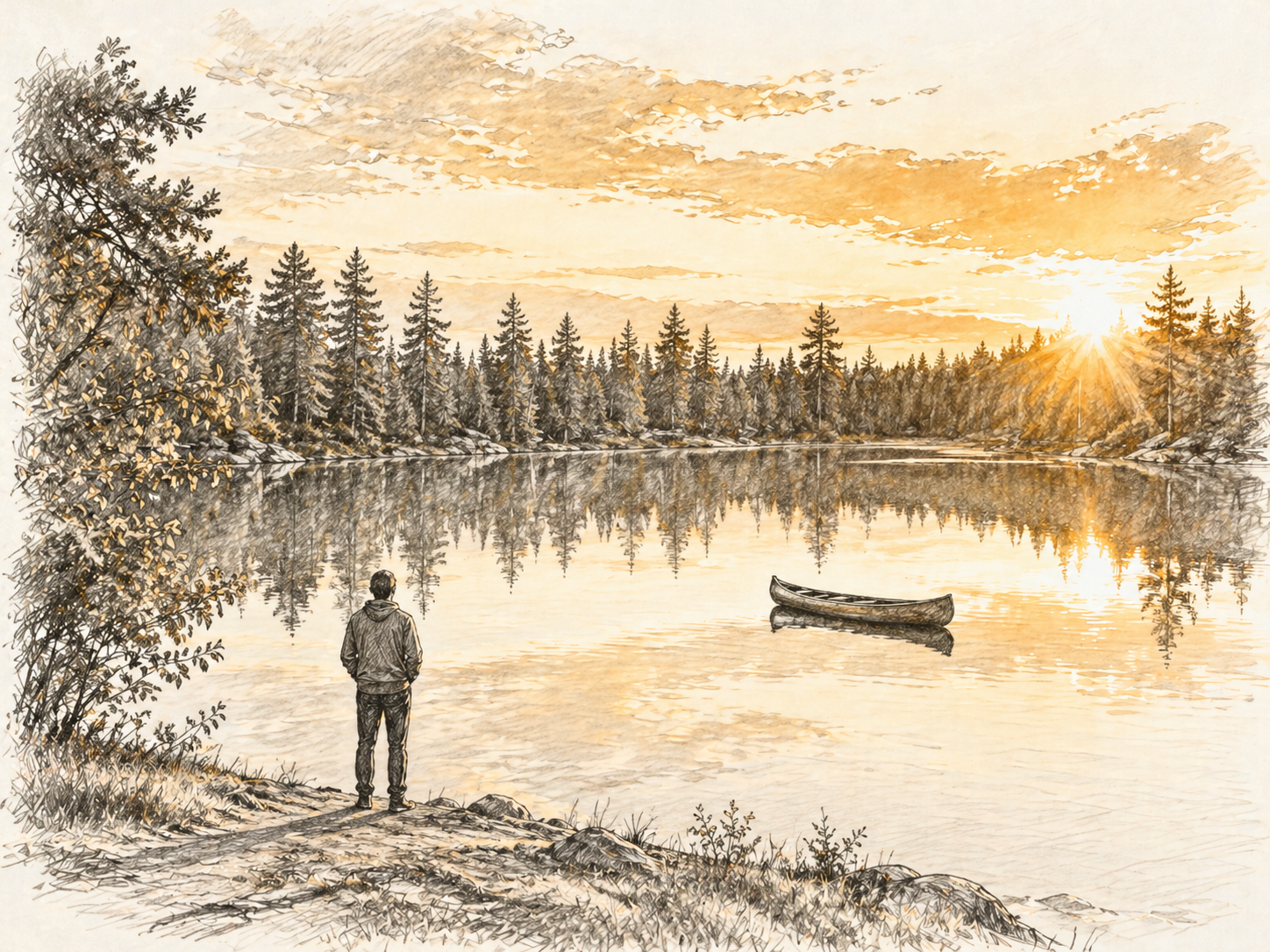
I’d never spent time in this part of the country. I found a lake nearby. Got in the car. Drove until the road ended at the water.
I don’t know how long I stood there.
Families on the beach. Kids in canoes. Someone’s grill going. The smell of summer in the woods and the sound of people who had nowhere they needed to be. The lake completely still — except where the canoes cut through it, and then still again.
I had been the only surgeon available within 80 miles.
And I was standing at a lake on a Tuesday afternoon in August.
Both of those things were true at the same time. That’s what nobody tells you about this life.
Here is what I found in rural America, since that’s what the title promised.
I found patients who were genuinely grateful in a way that is different from the gratitude I encounter elsewhere. Not more deserving — just more present with it. When your nearest surgeon is a long drive away, you know what it cost you to get here. You don’t take the appointment for granted.
I found an OR team that communicated differently than any I’d worked with. In a small hospital with small staff, there’s no room for the kind of ambient dysfunction that accumulates in large institutions. Everyone knows everyone. Everyone covers for everyone. There’s an efficiency that comes from necessity that you don’t find in places where there’s always another person to call.
I found a version of myself — surgical, deliberate, focused — that I don’t always have access to in busier environments. When you’re the only surgeon for miles, the clarity is different. The responsibility sharpens you.
And I found a lake at sunset that made me understand, in a way that’s difficult to articulate, that I had made the correct decision.
The loneliness is real. I won’t pretend otherwise.
It comes in waves — not as a constant, but as a presence. The hotel room after a long shift. The call that ends and leaves the room quieter than before. The particular guilt of knowing that the people you love are living their lives in your absence and that you chose this.
Sometimes I have to remind myself that this assignment is not for right now.
It’s a deposit.
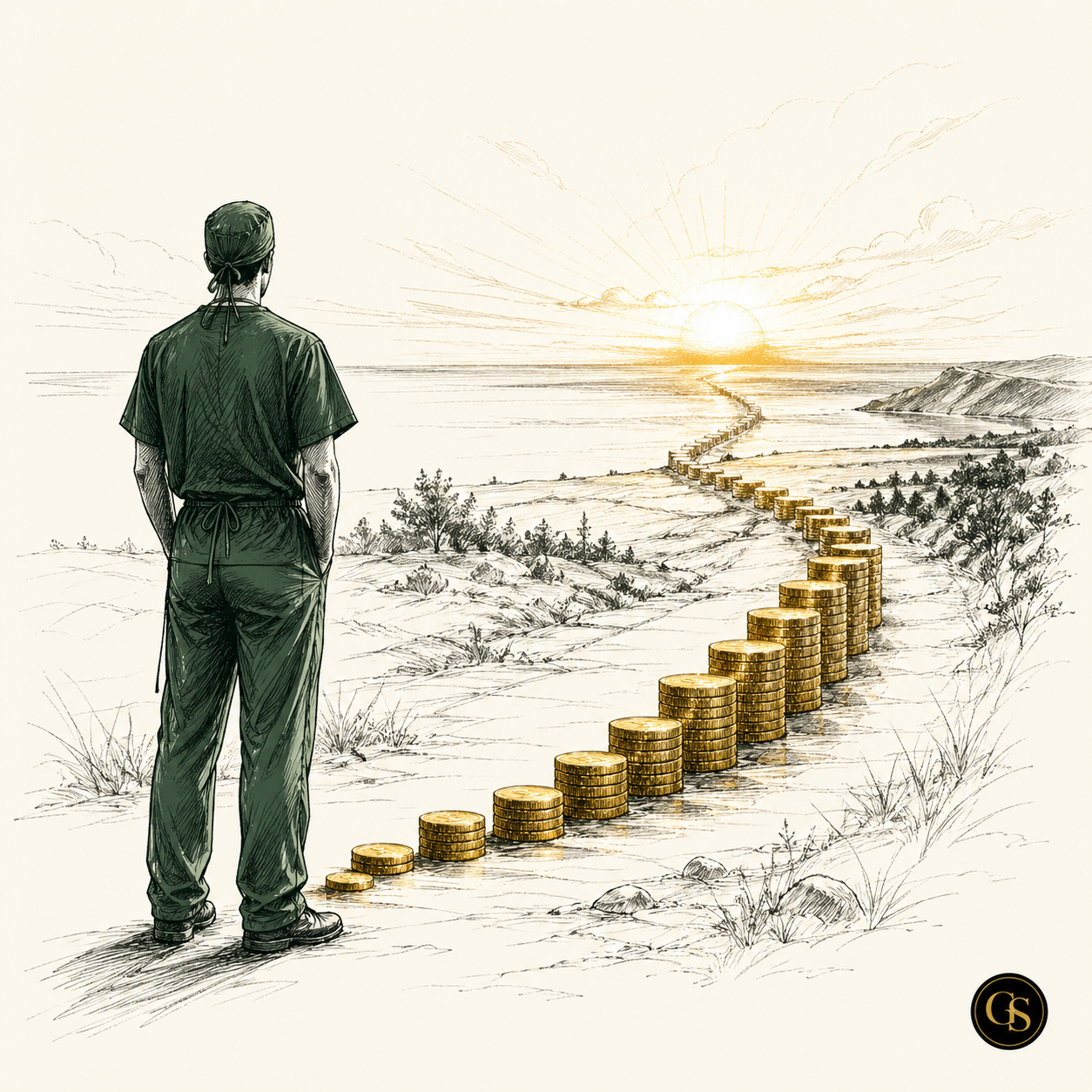
With more than half of rural doctors aged 50 or older, there will be a projected 23% decline in rural physicians by 2030 due to retirements. The gap between where surgeons are and where patients need them is going to get wider before it gets narrower. The physician who shows up in that gap — who can function anywhere, who walks the OR on day one, who doesn’t need the comfort of familiar systems to do excellent work — that physician is not just managing their own career.
They’re doing something that actually matters.
That’s not a small thing. And it’s not separate from the financial architecture I’m building. It’s the same thing. Work optional doesn’t mean work aimlessly. It means work intentionally — toward the cases that need you, the communities that are counting on someone to show up, and the version of this career that actually matches the reason you came.
I came to be a surgeon.
Not a cog. Not a metric. Not a W-2 employee managing RVU targets at a facility I never chose in a city I never planned to live in.
A surgeon. In places that need one.
The lake helped me remember that.
Sources:
- National Rural Health Association, Rural Health Voices Blog, 2025 — ruralhealth.us
- Miller-Hammond K, Anderson D. Barriers to Surgical Health Care Access in Rural Communities. Sage Journals, 2025
- AAMC. “Desperately Seeking Surgeons” — aamc.org
Synergy Health Partners. Physician and Surgeon Shortages in Rural America, 2025
Work optional. Life intentional.
— Golden Scalpel

Nothing here is financial, legal, or medical advice. Golden Scalpel is an independent media publication. Always consult a qualified professional before making major decisions. This is perspective, not prescription.