
The Dinner Nobody Scheduled...
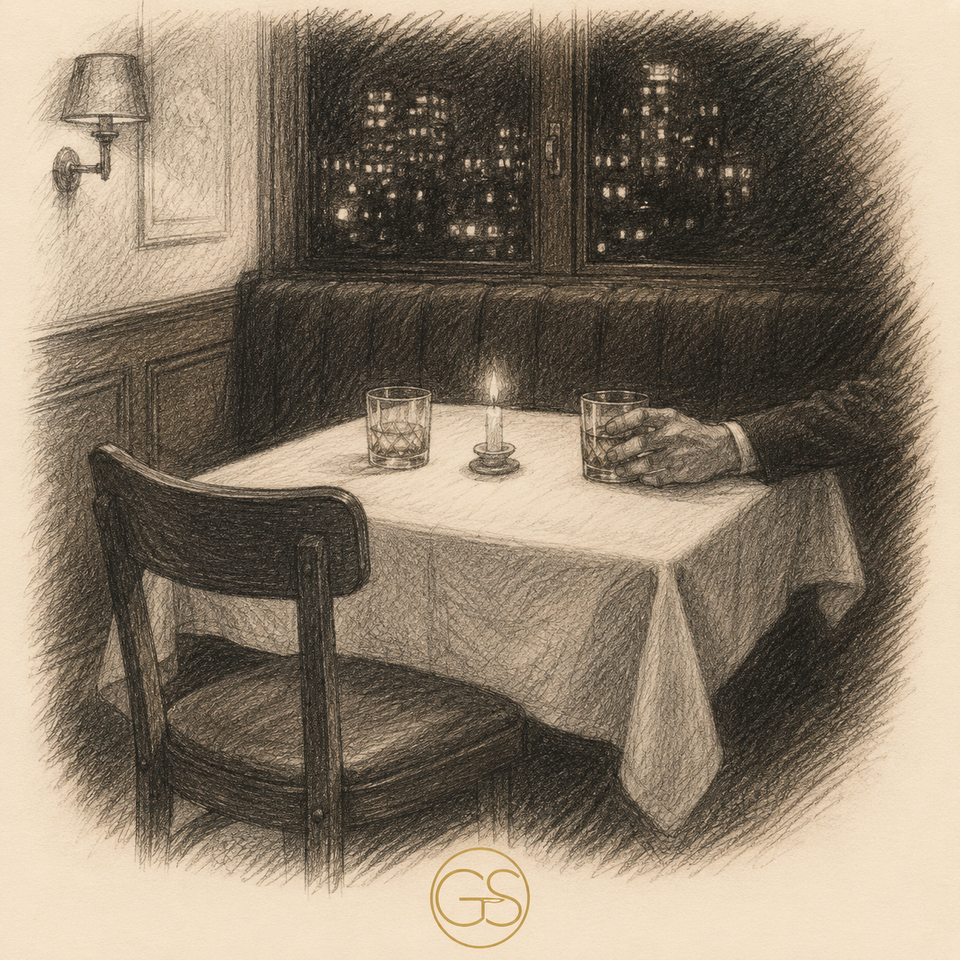
A Friday shift. An impromptu dinner. A conversation nobody planned to have.

I showed up on Friday.
Handoff with the outgoing surgeon. Quick, efficient, the way surgeons talk to each other — shorthand, context, the cases that matter and the ones that don’t. We covered the floor. We covered the OR. And then, almost as an afterthought, he asked if I wanted to grab dinner later.
Sure. No problem.
I took call. Gallbladders. Appendixes. Scopes. Clean cases, good outcomes, the kind of shift that reminds you why you chose this. Drove back to the hotel. Watched part of the game. Waited.
A few days earlier, an email had arrived from the administrative layer — the big wigs, as they’re known in every hospital system everywhere, regardless of what their actual titles are. They wanted a quote-unquote check-in. Monday. Calendar invite already sent.
I noted it. Filed it somewhere in the back of my mind. Kept moving.

I was five minutes late to dinner.
He was already there. Already had a drink in front of him. And he had a look on his face that I recognized immediately — not because I’d seen it on him before, but because I’ve seen it on people before they say something they’ve been holding for a while.
It was the look of someone about to deliver news.
I sat down. Ordered a drink. Made a joke about the gallbladder from earlier because that’s what surgeons do when they sense tension — we operate on it with humor and hope for the best.
He didn’t laugh the way people laugh when something is funny.
He laughed the way people laugh when they’re about to say something serious.
Has anybody told you what’s going on?
I told him I was doing a great job. He didn’t disagree. He also didn’t change his expression.
He said: they’re cutting call coverage. Seven AM to seven PM. No overnight. No weekends. They already cut OB. Now this.
He asked again. Had anybody told me?
No. Nobody had told me.
I said: tell me more.
Here’s what he told me.
The hospital — like a lot of hospitals — was restructuring its call model. The overnight hours, the weekend hours, the hours when cases come in through the door at 2am and someone has to be there — those were being renegotiated. Quietly. Without a conversation with the surgeons actually covering them.
And somewhere in that restructuring, another conversation was happening: they were having trouble covering a second trauma center within the system. They needed bodies. They were wondering — and this is the part that made the hair on my neck stand up — whether the current arrangement could be extended. Whether I could cover both.
Same contract. New hospital. More hours. Same terms.
I want to be precise about my reaction to this.
The answer was no.
Not a soft no. Not a let-me-think-about-it no. Not a that’s-interesting-tell-me-more no.
An absolute, immediate, structural no — for one reason that has nothing to do with attitude and everything to do with arithmetic.


My contract is built on a daily base rate. Twenty-four hour coverage. That’s the agreement.
If they cut twelve of those hours, one of three things happens: my rate adjusts proportionally and I earn less for the same presence, my rate stays the same and the math shifts in my favor, or they want me to cover a second facility to fill the hours they’re removing from the first.
None of those outcomes were negotiated with me. All of them affect my income. And the suggestion that I absorb a second trauma center at the terms of my current contract is not a request.
It’s a test.
It’s a test of whether I understand my own position.
Then he tried to find the walls of my cage.
Don’t you have a two-year contract? he asked. Casually. The way people ask questions when they already think they know the answer.
No, I told him. Ninety days.
He looked at me the way people look at something they didn’t expect to see.
Ninety days notice. My choice. Something I requested specifically — because a yearly contract is a trap dressed as stability. It sounds like security until the moment the system decides to restructure its call model on a Tuesday without telling you, and suddenly you’re doing math on how many months you’re locked in and what it’s going to cost you to leave.
Ninety days. That’s all they get. That’s all I give.
If they walk into Monday’s meeting and put something on the table that doesn’t work for me, I already know what happens next. I thank them for the opportunity. I hand them my notice. I have other hospitals behind me. I will not lose a dollar.
To him, sitting across the table, this was clearly not the answer he expected.

I have one thing that changes every calculation in that conversation.
Leverage.
Not attitude. Not ego. Not the particular confidence that sometimes gets mistaken for arrogance in physicians who are finally starting to understand their own value.
Leverage. The structural, contractual, logistical fact that I do not belong to this hospital. I do not belong to any hospital. I belong to multiple systems across multiple states, which means that when one system decides to restructure its call model without telling me, my response is not anxiety.
My response is: interesting. Tell me what you’re proposing. I’ll tell you what that’s worth.
They have to pitch me. They have to make the case. They have to sell me on the new arrangement because the alternative — the thing they’re not saying out loud but that sits underneath every conversation like this — is that I leave. And they don’t have a replacement.
That is leverage. That is what the independent physician model actually feels like from the inside of a dinner nobody scheduled.
The surgeon across from me had been in the game for twenty years.
I watched his face while I said all of this. And what I saw wasn’t disagreement. It wasn’t skepticism.
It was recognition.
Not of my situation — of his own.
He told me he’d been getting offers. That he’d been looking. That he’d been running the same calculation quietly, for longer than he’d admitted to most people, and arriving at the same place — that the hospital he’d spent two decades building loyalty toward had demonstrated, through a series of quiet restructurings and calendar invites and dinners-with-a-look, that the loyalty was not symmetrical.
I asked him what would force his hand.
He gave me a list. And every item on that list was some version of the same thing: a moment where staying cost more than leaving.
He’s almost there.

I looked at him across that table and felt two things simultaneously.
The first was something close to grief — not mine, his. Twenty years. Real years. Early mornings and missed dinners and the particular kind of exhaustion that only comes from caring about something as much as this man clearly cared about his hospital and his patients and his place in a system he’d given everything to. You could see it in the way he held his glass. The weight of time invested in something that was not going to return the investment the way he’d planned.
The second thing I felt was clarity.
This is why I built what I built. Not because I knew this dinner was coming. But because somewhere earlier — in a different city, at a different table, in a different version of this same conversation — I understood that the system was never going to protect me the way I needed to protect myself.
His situation is not unusual. His situation is the default.
Mine is the exception — and it doesn’t have to be.
Monday morning I have a meeting with the big wigs.
A check-in, they called it.
I know what I’m walking into. I also know something they may not have fully accounted for.
I can hear their proposal. I can ask my questions. I can be professional and collegial and genuinely interested in finding a solution that works.
And if the solution they’re proposing doesn’t work for me, I can say so. Clearly. Without apology. Without the particular anxiety that comes from having nowhere else to go.
Because I have somewhere else to go.
Several places, actually.
The ninety day clock is mine. Not theirs.
Stay tuned.
Work optional. Life intentional.
— Golden Scalpel

Nothing here is financial, legal, or medical advice. Golden Scalpel is an independent media publication. Always consult a qualified professional before making major decisions. This is perspective, not prescription.